8 Lessons from Peter Drucker’s Managing Oneself
We’ve explored Peter Drucker before and the valuable lessons we gained from his book “The Effective Executive.” Drucker, known as the father of modern management, also authored a concise but powerful book called “Managing Oneself.” In this book, he reminds us that before we can succeed in managing our careers, our teams, or even entire organizations, we first need to understand and manage ourselves. This idea is at the heart of personal and professional growth.
Today, our careers are more self-directed than ever before. Drucker encourages us to look deeper than just asking, “What should I do?” Instead, he invites us to reflect on bigger questions: “Who are we? What are our strengths? Where can we make the greatest impact?” By focusing on these questions, we can find direction and purpose in our lives, and become more effective in everything we do.
Here are eight important lessons we can learn from “Managing Oneself.” These insights can help us take control of our personal development and make better choices about our future.
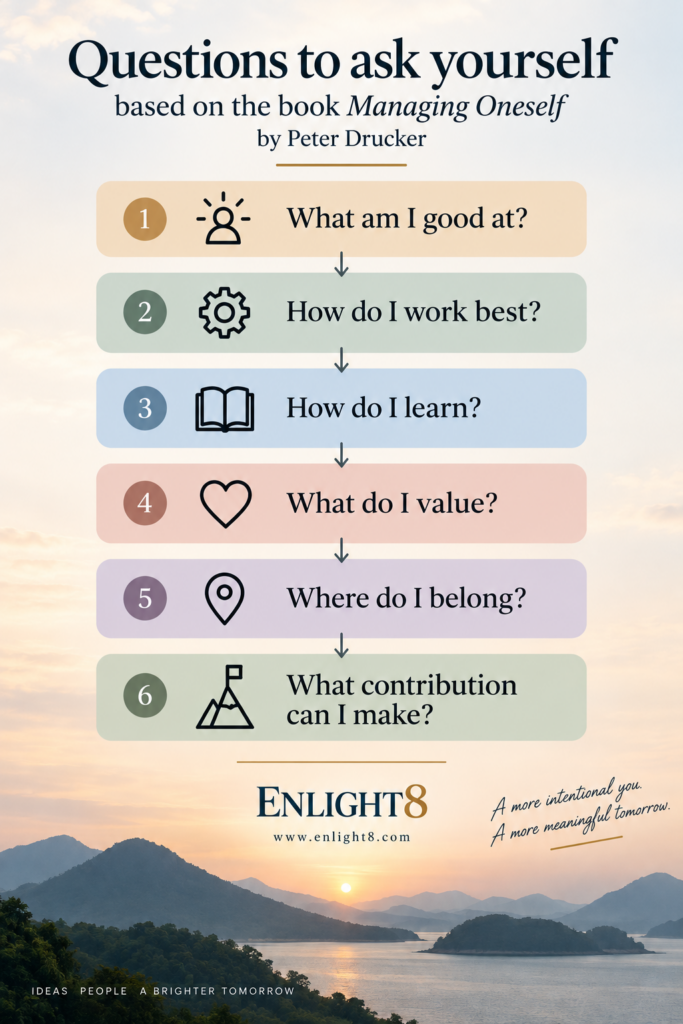
1. Know Your Strengths
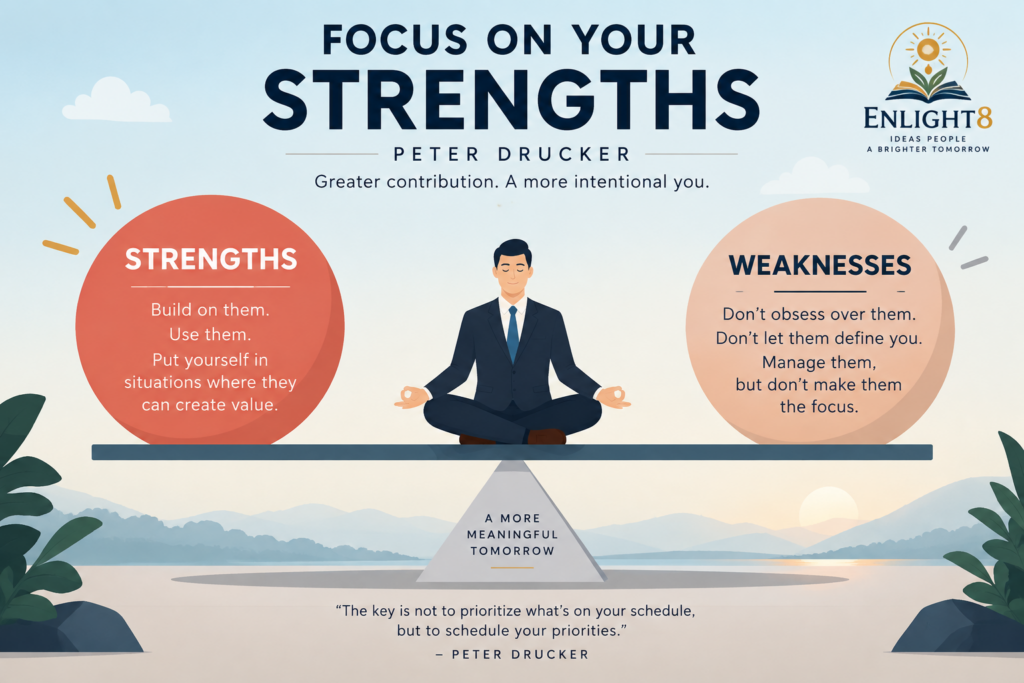
One of Drucker’s most powerful ideas is that we should shape our lives around what we do best, instead of getting stuck worrying about our weaknesses. By focusing on our strengths, we give ourselves the best chance to succeed and feel confident in what we do.
Most of us naturally pay more attention to what we aren’t good at. We spend a huge amount of energy trying to fix our flaws, often forgetting to recognize and appreciate the things we already excel at. When we focus only on our weaknesses, we miss opportunities to use our unique strengths.
Drucker suggests we take a different approach: let’s work on discovering our strengths and find ways to put ourselves in situations where those strengths can really shine and make a difference.
One useful way we can discover our strengths is through something Drucker calls feedback analysis. Whenever we make an important decision or take on a big responsibility, we should write down what we expect to happen. Then, months later, we look back and compare our expectations with what actually happened. Over time, we’ll start to see patterns that reveal what we’re naturally good at.
Enlight8 takeaway:
Our greatest potential might not come from trying to be good at everything. Instead, we can achieve the most by becoming truly exceptional at what comes naturally to us.
2. Understand How You Work
Knowing what we’re good at is just the beginning. We also need to understand how we work best so we can set ourselves up for success.
Some of us think best when we talk through ideas, while others prefer to write them down. We might work better on our own, or we might thrive in a group setting. Some of us make decisions quickly, while others need time to weigh all the possibilities. It’s important for us to notice these differences in ourselves.
There isn’t just one “right” way for all of us to work. Each of us has a unique style, and that’s okay.
Drucker points out that people who succeed often do so because they take time to understand their own working style. They make choices that allow them to play to their strengths and set up their environment in a way that helps them do their best work.
Enlight8 takeaway:
Self-awareness isn’t just about knowing our personality. It’s about understanding the specific conditions that help us do our best work, so we can make decisions that support our growth and success.
3. Discover How You Learn

We all learn in different ways, but many schools and organizations act as if there’s only one right way to learn.
Some of us learn best by reading. Others need to listen, experiment, teach, write, or jump in and do things hands-on. Each of us has a unique learning style that works best for us.
The important question isn’t:
“What is the best way for everyone to learn?”
It’s:
“How do we learn best?”
When we figure out how we learn best, we can take control of our growth. Instead of just collecting courses and certifications because we think we should, we can choose learning experiences that actually fit the way our brains work. This helps us learn more effectively and enjoy the process.
Enlight8 takeaway:
Let’s not just aim to be lifelong learners—we should also become learners who understand how we learn. That way, we make every learning experience count.
4. Know Your Values
Our strengths show us what we can do well, but our values help us decide what is truly worth doing. When we understand both, we can choose a path that feels right for us.
Drucker introduces the idea of a “mirror test”—asking ourselves if the way we’re working lines up with the kind of people we want to become. This reflection helps us stay true to our values, even when it’s tempting to follow someone else’s definition of success.
We might reach a level of success that looks impressive to others but still feel like something is missing if it doesn’t match our values and dreams.
A prestigious job, a higher salary, or an impressive title might sound great, but these things won’t bring us real fulfillment if our work goes against what we believe in. True satisfaction comes from living and working in a way that matches our deepest values.
Enlight8 takeaway:
Success becomes meaningful when what we achieve matches the kind of people we want to be. When our accomplishments reflect our values, we feel truly proud of what we’ve done and who we are becoming.
5. Find Where You Belong

Drucker makes an important distinction for us: it’s not just about finding the right job, but about finding the right environment where we can really thrive.
We might have a lot of talent, but if we’re in a place where those talents aren’t valued or needed, it’s hard for us to do our best work. On the other hand, we can truly thrive when we find an organization, team, or role that matches our strengths and values. It’s about finding a place where we belong and can make a real difference.
This means that when things aren’t working out for us, the answer isn’t always, “I need to fix myself.”
Sometimes the better question is:
“Am I in the right place?”
Finding where we truly belong can take some experimentation. We might need to try out different roles, organizations, or even industries before we discover the environment where we can contribute the most and feel at home.
Enlight8 takeaway:
Sometimes, the problem isn’t that we aren’t good enough—it’s simply that we haven’t found the right environment yet. When we surround ourselves with people and situations that value what we offer, we can finally reach our full potential.
6. Ask: “What Should My Contribution Be?”
This might be the most important question in the entire book because it challenges us to think in a new way.
Drucker encourages us to move beyond asking:
“What do I want?”
and instead ask:
“What should my contribution be?”
This question pushes us to connect our strengths with something bigger than just our own goals. It encourages us to think about how we can make a real difference in the world around us.
What problems can we help solve?
Who can we help with our unique skills and experiences?
What needs to be accomplished that we are especially equipped to do?
What unique combination of knowledge and abilities can we bring together?
By asking these questions, we shift our mindset from focusing just on career advancement to thinking about the impact we can make. When we focus on making a difference, we find more purpose and meaning in what we do.
The interesting thing is, when we focus on making meaningful contributions, career advancement often follows naturally as a result.
Enlight8 takeaway:
Let’s not build our careers around just getting more for ourselves. Instead, let’s build them around contributing more to others and to our communities. When we make contribution our goal, success tends to follow.
7. Take Responsibility for Relationships

No matter how talented we are, our success depends on the people around us.
Drucker reminds us that effective people take responsibility for their relationships. This isn’t about trying to be friends with everyone or steering clear of tough conversations. Instead, it means understanding that everyone has different strengths, working styles, values, and ways of communicating. If we want to succeed together, we need to respect and work with these differences.
Instead of asking:
“Why doesn’t this person work the way we do?”
ask:
“How does this person work, and how can we work effectively together as a team?”
This becomes even more important as we step into leadership roles. Leadership isn’t about making everyone work exactly like us. It’s about creating an environment where each person can use their strengths, and where we all work together to achieve our goals.
Enlight8 takeaway:
Effective collaboration starts when we stop expecting everyone to be just like us and start appreciating what each person brings to the team. When we do this, we create stronger relationships and better results for everyone.
8. Manage the Second Half of Your Life

One of Drucker’s most forward-looking ideas is that all of us will increasingly need to manage our own second careers.
In the past, people often worked for the same organization for most of their lives and then retired. Today, many of us will have several different careers, reinvent ourselves, start new businesses, become consultants, volunteer, teach, or even pursue totally new interests later in life. The path is no longer straight. For us, it’s about growth, change, and new adventures, even as we get older.
Drucker encourages us to start preparing for this transition long before we actually need it. By getting ready early, we open up more possibilities for our future.
This means we need to keep developing new skills, building strong relationships, and maintaining interests outside of our main jobs. We should also think about how everything we’ve learned and experienced could be helpful in a completely different context. All of this helps us stay adaptable and excited about what comes next.
This is especially important as more of us are living and working longer than ever before. Our lives can have many chapters, and we have the power to shape each one.
Enlight8 takeaway:
Let’s not wait until our first career ends to ask what our second life will look like. If we start planning now, we can create a future that’s rewarding, meaningful, and uniquely our own.