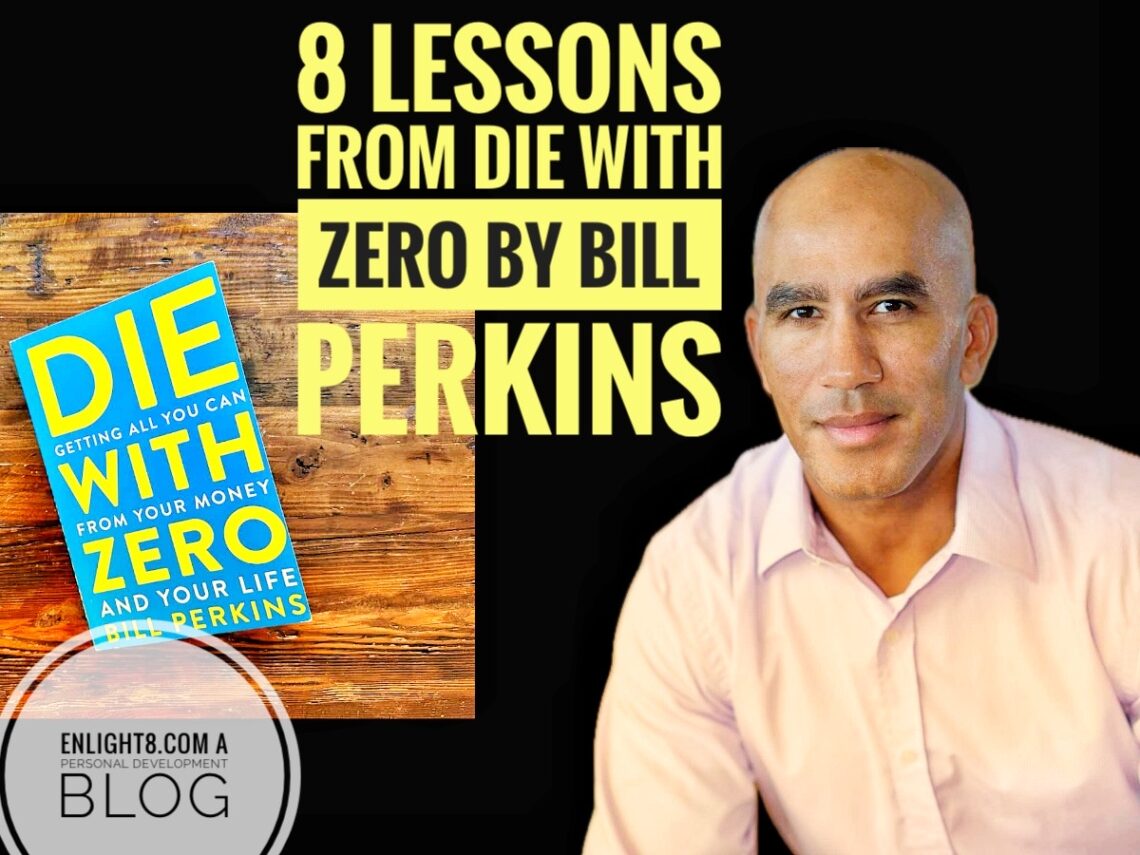
8 Lessons from Die with Zero by Bill Perkins
What is the purpose of money? Is it simply to accumulate the largest investment portfolio possible, or is there a better way to use it to live a richer, more meaningful life?
These are the questions that Bill Perkins explores in Die with Zero. Perkins is an American hedge fund manager, entrepreneur, film producer, poker player, and investor. Having built significant wealth throughout his career, he approaches personal finance from a perspective that challenges many of the conventional assumptions about saving and retirement.
In Die with Zero, Perkins turns many traditional retirement principles on their head. Rather than encouraging people to spend decades accumulating wealth only to leave behind the largest possible estate, he argues that money is a tool for creating meaningful experiences. His philosophy emphasizes balancing earning, saving, investing, and spending throughout our lives, with the goal of using our money when we have the greatest combination of time, health, and energy. According to Perkins, those three resources, not money alone, are what ultimately determine our ability to live a fulfilling life.
I recently finished reading Die with Zero, and it fundamentally changed how I think about money, investing, and retirement planning. While I don’t agree with every point in the book, its insights into behavioral psychology and the relationship between wealth and happiness challenged many of my long-held assumptions. It reminded me that financial success isn’t measured solely by the size of your portfolio, but by how intentionally you use your resources to create memories, deepen relationships, and build a meaningful life.
Here are eight lessons from Die with Zero that I found especially thought-provoking and worth sharing.
1. Retirement Comes in Phases
The most practical idea I got from Die with Zero is the viewpoint that retirement shouldn’t be seen as a single, linear phase that ends at the endpoint. Bill Perkins writes that we should divide it into three stages based on our health, energy, capabilities, and money, not age. The way we use money should support our life goals and change as we move through different phases of our lives.
Working Years
These are the years we should primarily focus on building our financial foundation. This means saving our earnings and investing for the long term. However, Perkins notes that we should not postpone all of life until retirement; instead, we should enjoy it while we have the youth and energy. This may be the time to invest in creating experiences and memories that require physical energy.
Go-Go Years (55-70 years)
These are the golden years of retirement. Perkins writes that these are the years with an ideal combination of time, financial resources, and good health. This should be the season for traveling, going on adventures, pursuing hobbies, and spending quality time with family and friends. Perkins believes this is the time when retirement spending should peak, maximizing each dollar to its fullest potential to create lasting memories while we still have the energy.
Slow-Go Years (70-80 years)
Entering the Slow-Go years may mean slowing down physically. Those travels demanding great physical energy may no longer be possible. Instead, we should focus on activities with minimal physical demands, such as cruises, travel excursions, or spending time with loved ones. Spending time may gradually decrease; instead, focus on the simple pleasures and continue building relationships with friends and loved ones.
No-Go Years (80+ years)
These years are often marked with greater physical limitations, making many activities that were once enjoyable become difficult or perhaps no longer possible. Happiness during this phase comes from connections with family and friends, and memories accumulated throughout life. This is why we invest in the earlier years, creating memories, as they pay dividends during this stage of life, reminding us of a well-lived life and legacy, not measured by money but by what we leave behind and the lives we touched along the way.
2. Time and Health Are Fleeting

As we pursue financial success, we need to acknowledge that accumulating wealth often comes with trade-offs. Money alone cannot guarantee us happiness or a truly meaningful life. It simply provides us with opportunities for comfort or convenience if we use it thoughtfully. The more wealth we acquire, the less each additional dollar contributes to our overall satisfaction. This reality challenges us to prioritize the quality of our lives, especially as we age, rather than focusing solely on growing our bank accounts.
Our most valuable assets are not just financial—they are our time, our health, and our energy. We need to intentionally plan how we spend these finite resources, recognizing that money is only a tool for creating experiences and memories that enrich our lives. If we neglect to invest our time and energy wisely, no amount of wealth will compensate for the meaningful moments we might miss.
3. Investing for the Long Term Must Be Balanced by Spending
We have all heard stories about people who worked hard, lived frugally, and saved every penny, only to pass away without ever enjoying the wealth they accumulated. They missed out on the chance to use their money to truly experience life. Perkins challenges us to find a balance between investing for the future and intentionally spending on meaningful experiences throughout our lives. Instead of postponing enjoyment indefinitely, we should recognize that our ability to make the most of life changes as we age and as our health and energy fluctuate.
The most rewarding time for us to spend on experiences is when we are healthy and energetic enough to fully appreciate them. By using our resources thoughtfully at the right moments, we can create memories that last and genuinely enrich our lives. Ultimately, it is not just about how much we save, but how well we use what we have to live meaningfully.
4. Create a Bucket List and Start Ticking It Off

One valuable step for us to live more fully is to create a bucket list that captures the experiences we want to have during our lifetime. These could be dreams like traveling to new countries, mastering new skills, or reaching personal goals that matter to us. Perkins encourages us not to wait until retirement or some distant future to pursue these dreams.
By actively working through our bucket list now, we make the most of our time, energy, and resources while we are able to truly enjoy them. Taking action sooner allows us to create lasting memories and ensures that we don’t miss out on meaningful opportunities by putting them off for too long.
5. Be Careful of Time Traps and Money Pits
Perkins urges us to pay close attention to what he describes as “money pits” and “time traps.” Money pits are expenses or possessions that slowly drain our finances without giving us meaningful value in return. Time traps, on the other hand, include activities or commitments that consume a lot of our time but don’t actually bring us fulfillment or contribute to our well-being.
To make the most of our lives, we need to recognize and avoid these pitfalls. By freeing ourselves from unnecessary financial drains and time-wasters, we create more space for experiences and activities that truly enrich us, bring us joy, and build lasting memories. It’s important for us to regularly reflect on how we spend our time, energy, and money, making sure we invest these resources in ways that align with our values and enhance our quality of life.
6. Don’t Wait to Give Money Away

Perkins encourages us to rethink the traditional idea of leaving large inheritances after we pass away. Instead of holding onto our wealth until the end of our lives, we should consider giving money to our loved ones or supporting causes we care about while we are still here to witness the impact. Doing so allows us to experience the joy of seeing our gifts improve the lives of family members or help meaningful organizations in real time.
By giving when it matters most, when our children or loved ones are building their lives, facing challenges, or pursuing their dreams. We can provide support when it is most needed. This approach helps us build deeper connections and enables our generosity to have a more powerful impact.
Ultimately, Die with Zero challenges us to use our money as a tool for connection and positive change during our lifetimes. Rather than waiting for some distant future, we can make a real difference now and become active participants in the happiness and success of those we care about.
7. Create Lasting Memories

Perkins reminds us that one of the most valuable uses of our money is to create lasting memories. Rather than focusing exclusively on accumulating more wealth or buying material things, we should seek out experiences that will stay with us for a lifetime. These experiences become even more meaningful as we age, providing us with stories to share and moments to cherish.
It is important for us to consider what stage of life we are in and take advantage of opportunities to enjoy life while we are able. We should strive to fully use our resources to make memories with friends, family, and loved ones, knowing that these are the moments that bring true fulfillment.
By investing in what Perkins calls “memory dividends,” we create a reservoir of happiness that grows over time. The joy and satisfaction from meaningful experiences continue to enrich our lives long after the moment has passed, far outlasting the fleeting pleasure of material goods.
8. You Cannot Take It With You
Many of us worry about running out of money in retirement, which leads us to save and invest diligently throughout our working years. We fill our 401 (k) s, Roth IRAs, and other investment vehicles, hoping to secure a comfortable future. However, research shows that a significant number of retirees end up spending less than they could. For example, a recent study by the Employee Benefit Research Institute found that one-third of retirees still had all their original retirement assets by their mid-80s. This suggests that fear of running out of money can cause us to hold back, even when we’ve already saved enough.
We need to accept that our goal shouldn’t be to accumulate the most wealth just for its own sake. We can’t take our money with us when we die, and there is little value in becoming the richest person in the cemetery. Instead, we should focus on using our financial resources to enrich our lives and the lives of others while we still have the time, health, and energy to do so.
Money, at its core, is simply a resource—a tool that can help us create experiences, deepen relationships, and pursue what truly matters. If we let fear or old habits keep us from spending and sharing, we might miss out on the opportunities for joy, connection, and fulfillment that money can provide.
What resonates with me most after reading Die with Zero is the idea that money should serve us, not the other way around. This book has helped me see that true financial wisdom lies in using what we have to live life more fully right now, making the most of our time and energy, and treating money as a means to a richer, more meaningful existence.